Power Conditioning@kemela
Listen to your Hi-Fi system after midnight. Sounds better doesn't it! A power filter/conditioner will give the same kind of improvement so you don't have to wait until late at night to enjoy your system at its best.
The need for power conditioning
Most U.S. domestic power supplies are not the pure clean alternating sine wave we imagine them to be. Instead your expensive Hi-Fi equipment is fed an irregular asymmetrical triangulated waveform spiked with noise components over a wide bandwidth including radio frequencies.
Noise and unwanted interference is dumped on to your home mains supply from Internet-connected smart devices, LED lighting, light dimmers, air conditioning motors, and multiple cell phone towers in the neighborhood emitting radio frequency interference (RFI). Surface oxidation of wires in the twist connectors and outlets throughout the mains circuits in your home act like semiconductor diodes converting radio frquencies into detectable audio band frequencies. DC voltage offsetting the AC waveform and other waveform distortions can be introduced causing transformers in Hi-Fi components to buzz and send hum to loudspeakers.
As mains polution increases, the benefits of power filtration (and shielding on all HiFi cabling) is more apparent than ever.
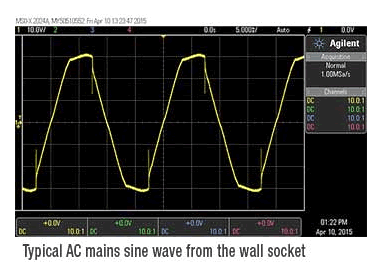
Avoid inexpensive general purpose power strips
Buying an inexpensive power strip with surge protection from a home improvement or office supply store because you have run out of outlets is not the right tool for the job; computers do not pull the same transient power requests as music does.
Surge protection and wiring methods, ineffective filtering of noise in frequencies that effect audio systems, and cheap outlets in these general purpose power strips will often make your system sound worse than plugging directly into wall sockets.
The Power Supply is an expensive part of any Hi-Fi component
Elaborate power supply sections that better compensate for mains supply fluctations, noise, artifacts and irregularities are needed to obtain the better performance of more expensive Hi-Fi components. Simpler power supplies have to be used in cheaper Hi-Fi to keep the price low. Physical space available inside any component contrains the purity of power supplied to circuit boards in one component.
Power Distribution and Conditioning requirements for HiFi systems
The lowest impedance possible (which means larger more expensive components) ensures unrestrained delivery of large transient bursts o0f power that amplifiers can draw from the mains in response to musical transients without impediment. There should be very little fluctation, noise, artifacts and irregularities to disturb digital to analog conversion of low voltage signals to prevent jitter and data corruption.
Isolating digital devices including class D amplifiers, that generate their own noise causing interference on the mains, so they don't cross-contaminate other components in the system.
Block noise going in and coming out of powered electrostatic and ribbon panel loudspeakers that contain lots of wire that antenna-like picks up radio frequencies, and noise contamination into the rest of the system via the power cables.
Reduce irregular waveforms, flutuactions and spikes to improve the wow and flutter and speed consistency of turntables.
Sonic benefits of power conditioning
Sound stage size, depth, and space is increased. Less masking of instrument decays and more cleanly defined harmonics for better timbres and vividness. With better transients there is a greater sense of how a musician is playing an instrument or using their voice.
kemela has a range power filters to suit your system and we strongly recommend investing in one.
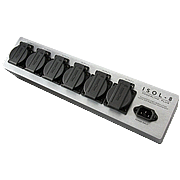
Isol-8
Powerline Plus
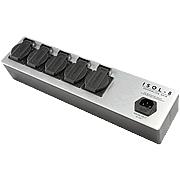
Isol-8
Powerline Axis
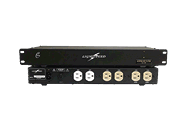
Chang Lightspeed
319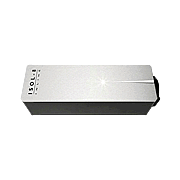
Isol-8
Inline
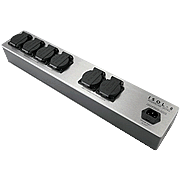
Isol-8
Powerline Ultra 6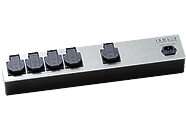
Isol-8
Powerline Extreme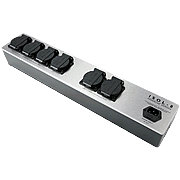
Isol-8
Powerline Chroma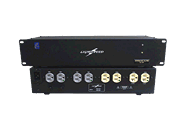
Chang Lightspeed
719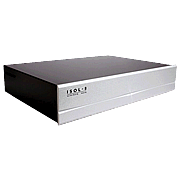
Isol-8
Minisub Wave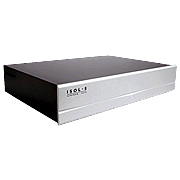
Isol-8
Minisub Axis
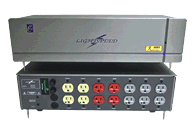
Chang Lightspeed
Reference MK5
Isol-8
Substation Axis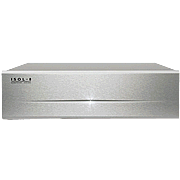
Isol-8
Integra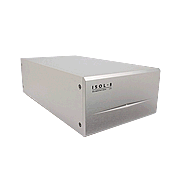
Isol-8
Substation LC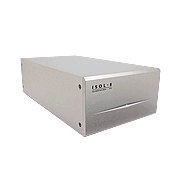
Isol-8
Substation HC
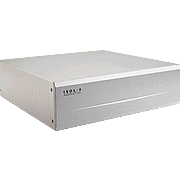
Isol-8
Substation LCX
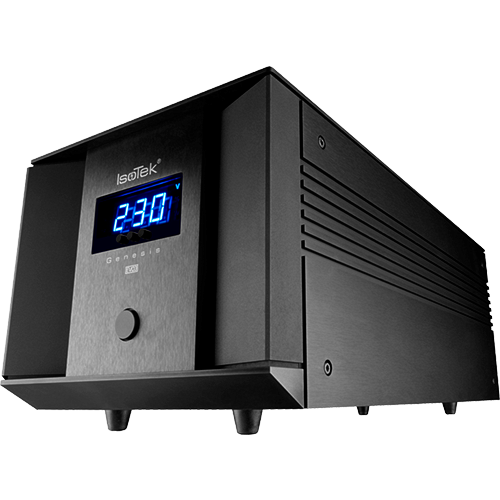
IsoTek
Mosaic Genesis